
Built to Scale: How Oracle Fusion Cloud ERP Supports Growth, New Locations, and M&A
consolidation from the start makes the "migrate the acquired company onto our system" path meaningfully less disruptive than it would be onto a system that was only ever designed to run a single, simple entity.
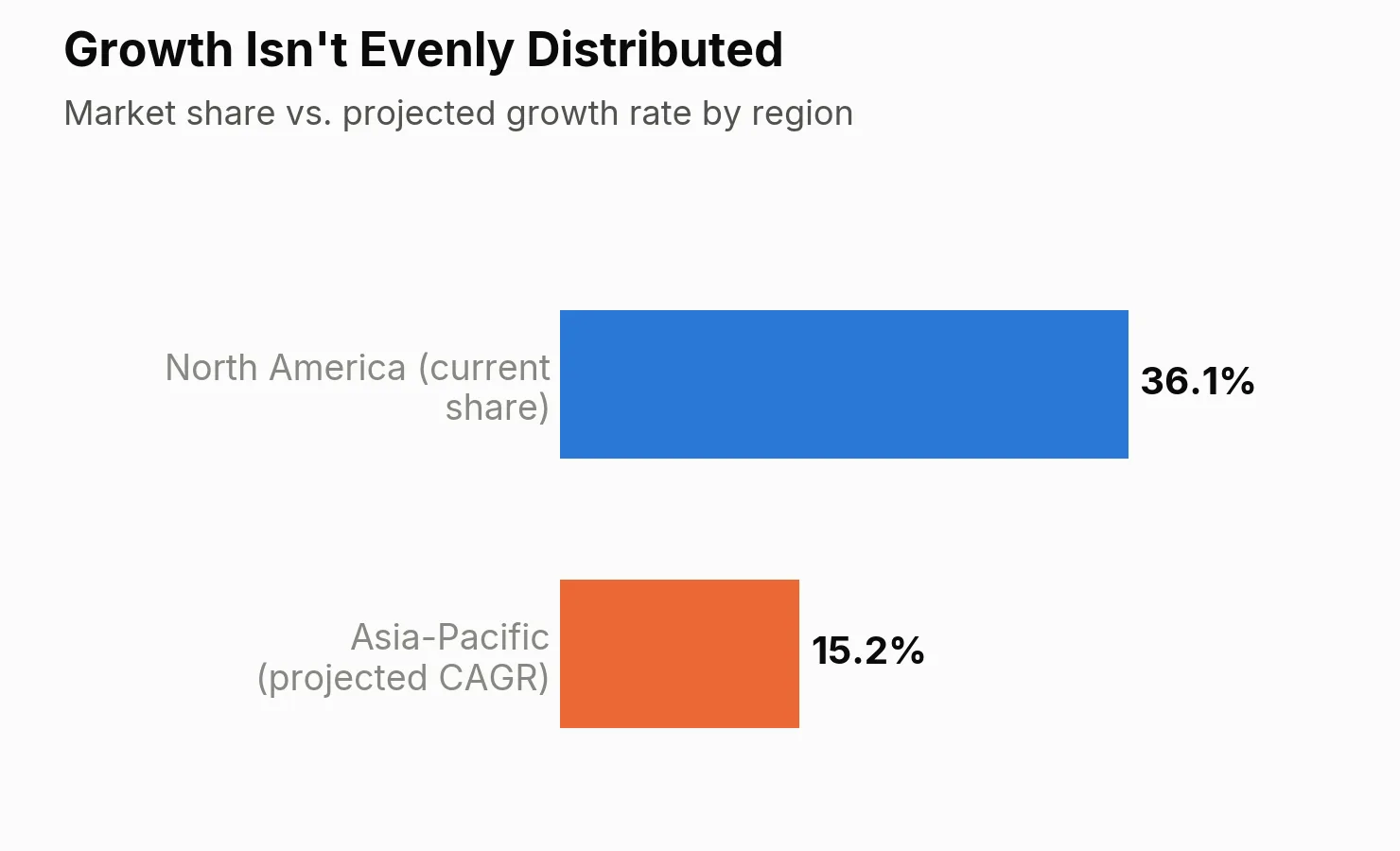
Growth in the cloud ERP market is concentrated unevenly across regions — a relevant consideration for any company with
international ambitions. Source: Mordor Intelligence, 2026.
The scaling challenges that show up even without an acquisition
Acquisitions are the most dramatic version of this problem, but plenty of companies hit real scaling friction just from organic growth. A company that's added several new product lines discovers its original chart of accounts and reporting structure, adequate for a simpler business, no longer produces the granularity leadership actually needs to make decisions. A company that's expanded into new sales channels finds that inventory and fulfillment processes designed around a single channel don't cleanly extend to handle a second one without real reconfiguration. None of these are failures of the original system — they're simply signs that the business has changed shape since the system was first configured, and the system needs to change shape along with it.
This is one of the genuine advantages of a cloud platform over the on-premise systems it's largely replaced: reconfiguration to support a new business model or a new entity structure is a configuration exercise within the existing platform, rather than a multi-year infrastructure project requiring new servers and a fresh implementation from scratch.