
Security and Compliance: Protecting SMB Data in Oracle Fusion Cloud ERP
and enterprise-grade infrastructure, versus an on-premise server that hasn't had its software updated in eighteen months because nobody at the company has the bandwidth to manage it properly.
Oracle Fusion Cloud ERP's security architecture includes data encryption both at rest and in transit, granular role-based access controls that determine exactly what each user can see and do within the system, detailed audit trails that log who accessed or changed what and when, and infrastructure-level protections that most SMBs would have no realistic way to replicate on their own hardware and budget. None of this makes a company immune to attack — nothing does — but it shifts a substantial share of the security burden onto a vendor whose core business depends on getting it right at scale.
Where responsibility still sits with the business, not the vendor
This is the part that gets glossed over too often: moving to a secure cloud platform does not mean security becomes someone else's problem entirely. Cloud security operates on what's generally called a shared responsibility model — the vendor secures the infrastructure and the platform itself, but the customer is still responsible for how they configure it. Weak password policies, overly broad user permissions granted out of convenience, poorly managed integrations with third-party tools, and employees who fall for phishing attempts are all risks that exist regardless of how secure the underlying platform is, and they're squarely the customer's responsibility to manage.
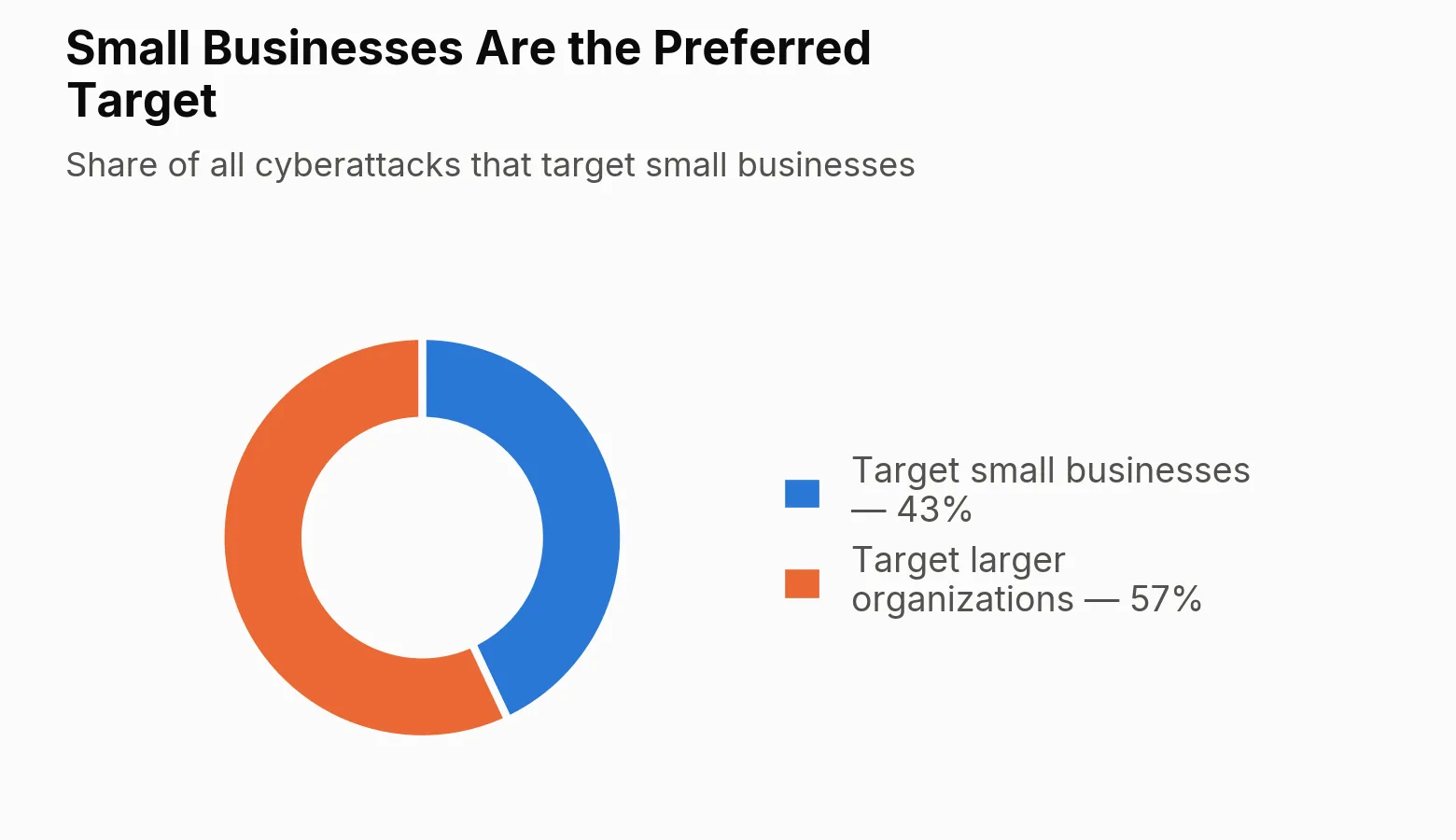
Small businesses face a disproportionate share of cyberattacks relative to their size and resources. Source: StationX / Verizon,
2026.
This is also where compliance requirements come into play, and they vary considerably depending on industry and geography — companies handling payment data need to think about PCI DSS, healthcare-adjacent businesses need to consider HIPAA, and companies with customers or operations in Europe need to think through GDPR obligations regardless of where the company itself
© Orpington Technologies Inc. www.orpingtontech.com
Page No. 3 of 4