
Why ERP Projects Go Over Budget and Behind Schedule — and How to Avoid It
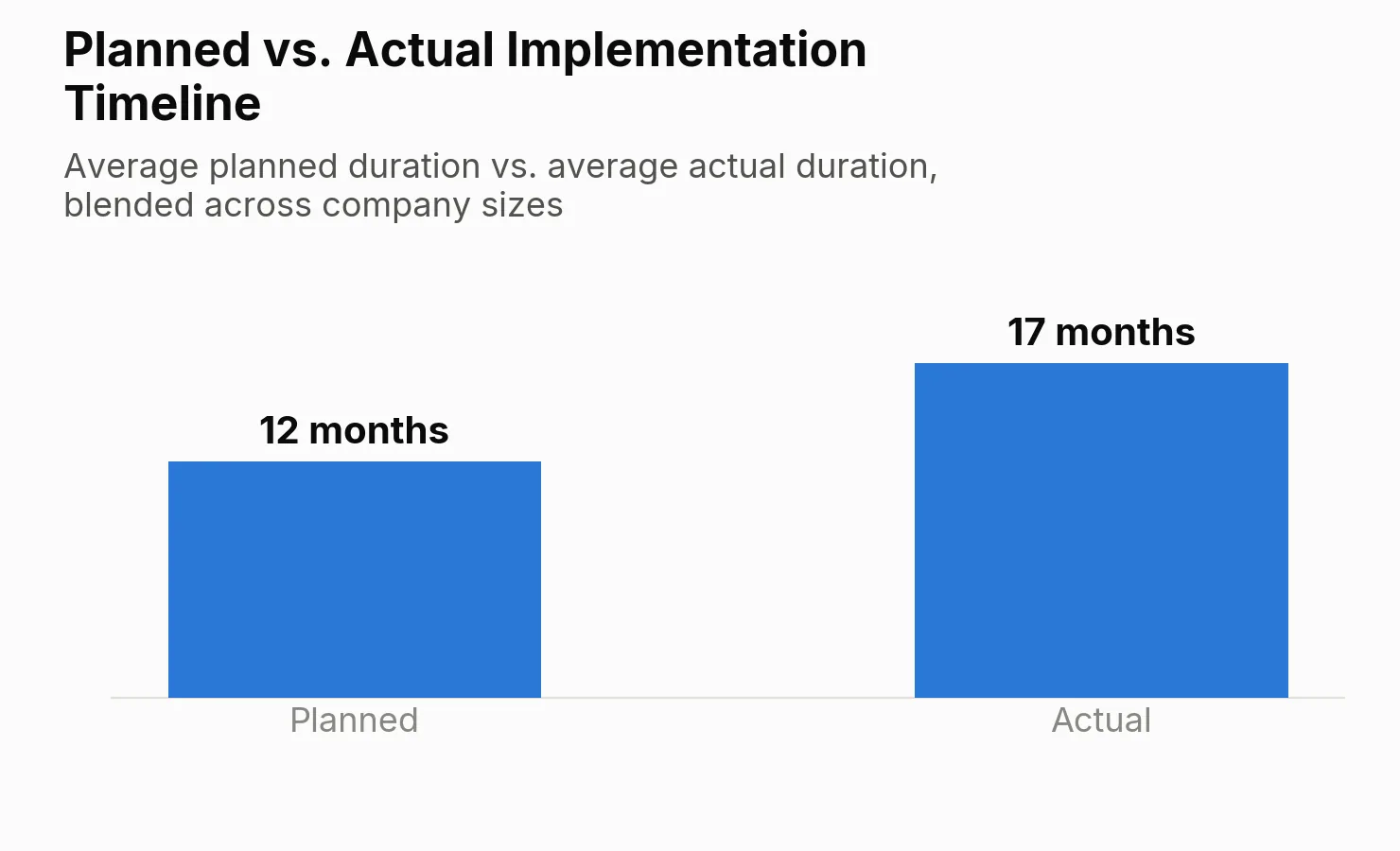
often overlooked — the ongoing cost of running old and new systems in parallel for longer than planned.
The gap between planned and actual implementation timelines is large enough to be the expected case rather than a
worst-case scenario. Source: KreativeCoreTech, 2026.
68%
of ERP projects fail to fully meet their original business objectives, according to Panorama Consulting's 2025 research — even though a majority of these projects do eventually go live.
Source: Panorama Consulting, 2025, via KreativeCoreTech
The patterns behind the numbers
A handful of root causes show up again and again in post-mortems of troubled ERP projects, and none of them are exotic or unpredictable.
Scope creep is probably the most common. A project that starts with a clear, disciplined scope gradually accumulates "just one more" customization request as users discover the standard configuration doesn't perfectly match their existing process — and each individually reasonable request adds time and cost that rarely gets weighed against the original timeline commitment.
Data migration is a close second, and one of the more consistently underestimated pieces of any implementation. Companies routinely discover, midway through a project, that historical data is far messier than assumed — duplicate customer records, inconsistent product codes, years of manual adjustments baked into balances nobody previously had reason to scrutinize closely. Cleaning that up takes real time that often wasn't built into the original schedule at all.
© Orpington Technologies Inc. www.orpingtontech.com
Page No. 2 of 4