
Brownfield, Greenfield, or Bluefield? Choosing a Path Before the Clock Runs Out
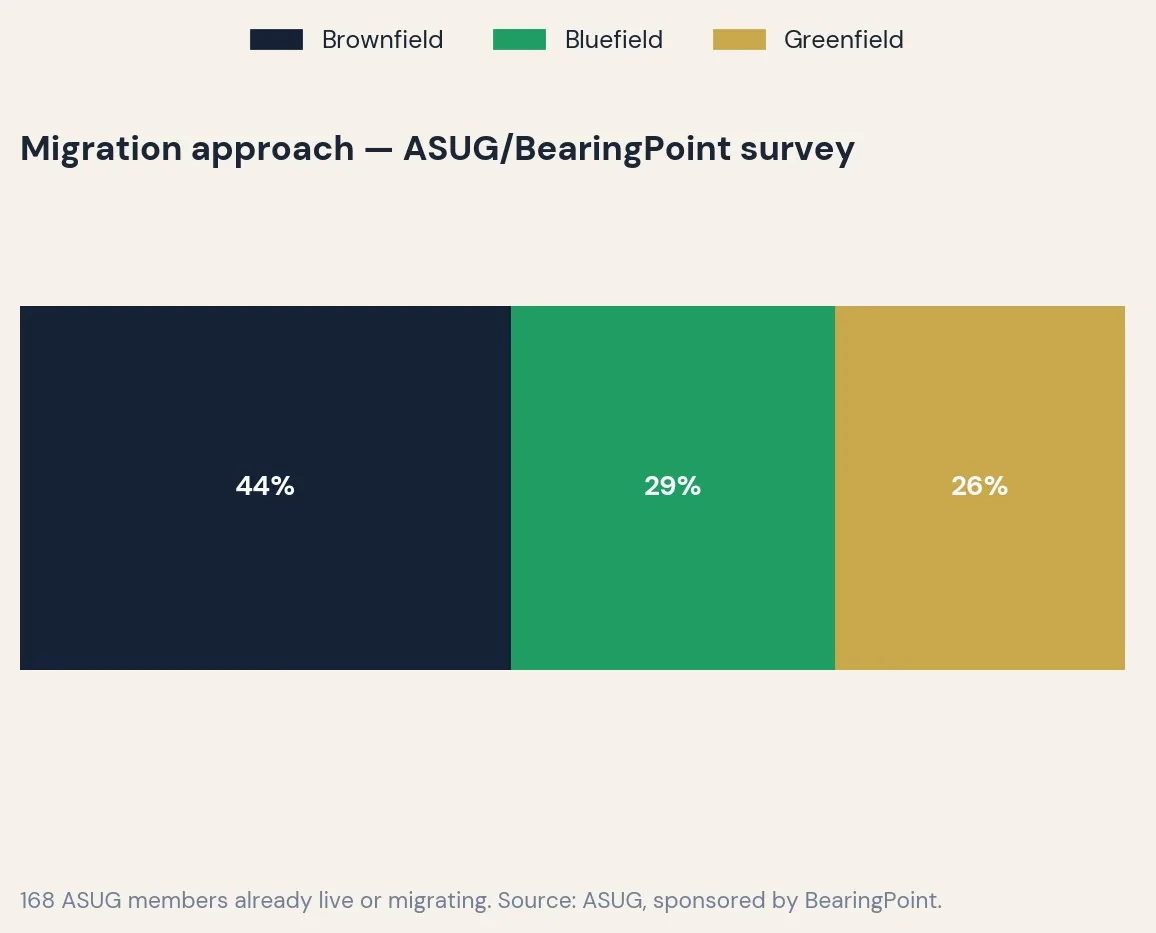
None of that makes brownfield the wrong answer. For a company with a genuinely stable, well- functioning ECC environment and a hard deadline bearing down, a faster technical conversion that buys breathing room is often the responsible choice — better a well-executed brownfield migration finished in 2026 than an ambitious greenfield redesign still mid-flight when mainstream maintenance ends. The mistake isn't picking brownfield; it's picking it by default, under deadline pressure, without ever actually evaluating whether a selective redesign of your highest-value processes would pay for itself.
What the data argues for is making this decision deliberately and early — ideally with enough runway left that greenfield or bluefield are still realistic options rather than ones the calendar has already ruled out. Half of ISG's respondents admitted they had over-customized their legacy systems to a point where standardizing now feels risky; that is a sentence that gets truer, not less true, the longer the decision gets deferred.
This is one of the first strategic conversations Orpington Technologies Inc. has with a new client — the Canadian ERP advisory firm runs a structured landscape assessment before recommending brownfield, greenfield or a hybrid path, specifically so the choice reflects the business's actual process maturity rather than whatever approach happens to fit the remaining calendar.
The fork in the road doesn't disappear if you wait to reach it. It just gets narrower, until only one path is still open.
Migration approach, by two independent surveys
Approach
ISG (200 large companies, Feb 2026)
ASUG/BearingPoint (168 members, 2025)
© Orpington Technologies Inc.
www.orpingtontech.com
Page
3
of
4