
How AI, Analytics, and Intelligent Automation Are Reshaping the SAP S/4HANA Business Case
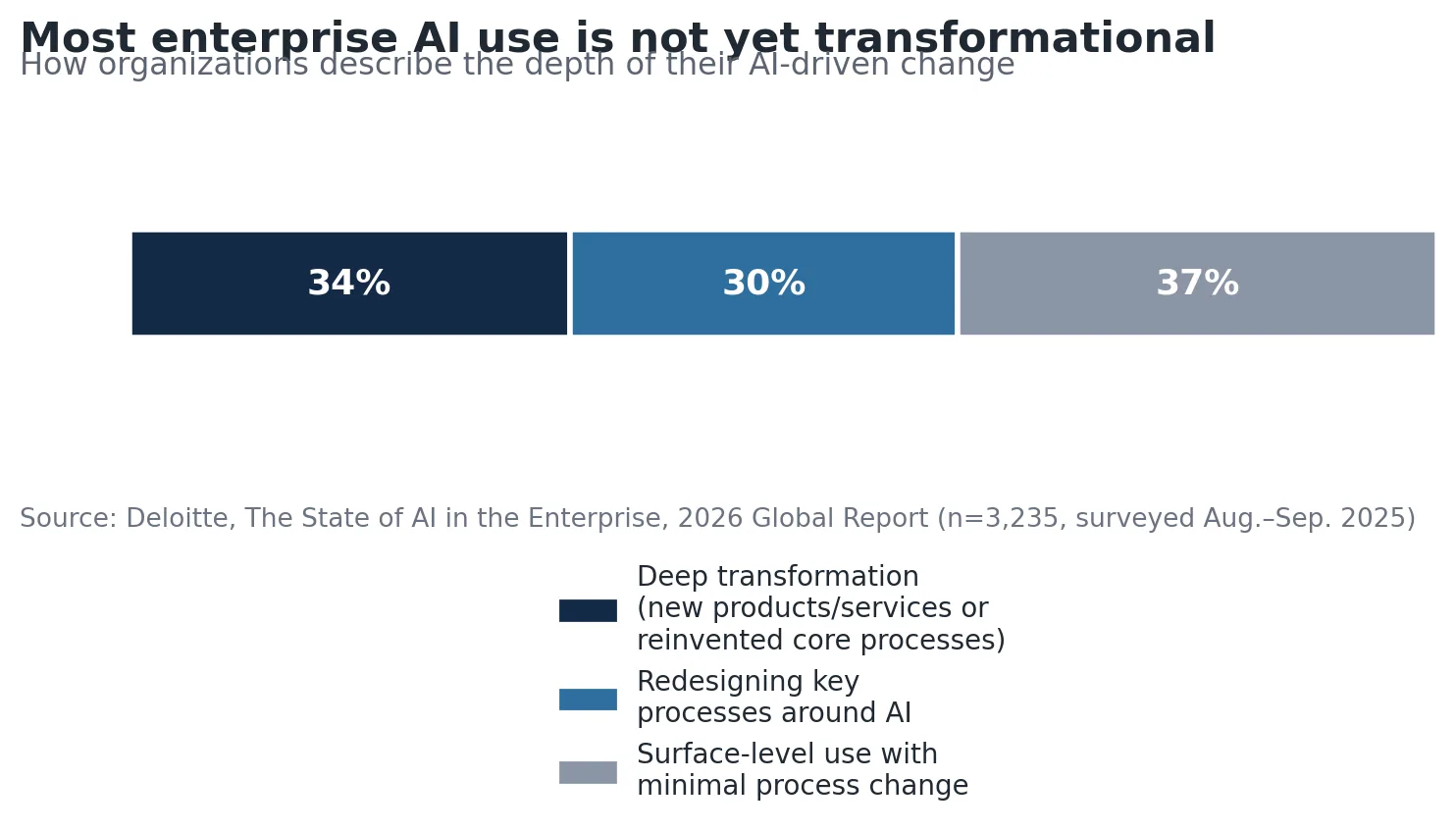
new products or services, or genuinely reinventing core processes. Another 30% describe themselves as “redesigning key processes” around AI. The remaining 37% — the largest single group — are applying AI only at a “surface level,” with minimal underlying process change.
Figure 1. How organizations describe the depth of their current AI-driven transformation.
What this shows:
The largest single group of organizations is still applying AI at a surface level. Deep, process-level
transformation remains the minority case, not the norm — a useful benchmark against which to weigh any migration pitch premised on AI as the primary driver.
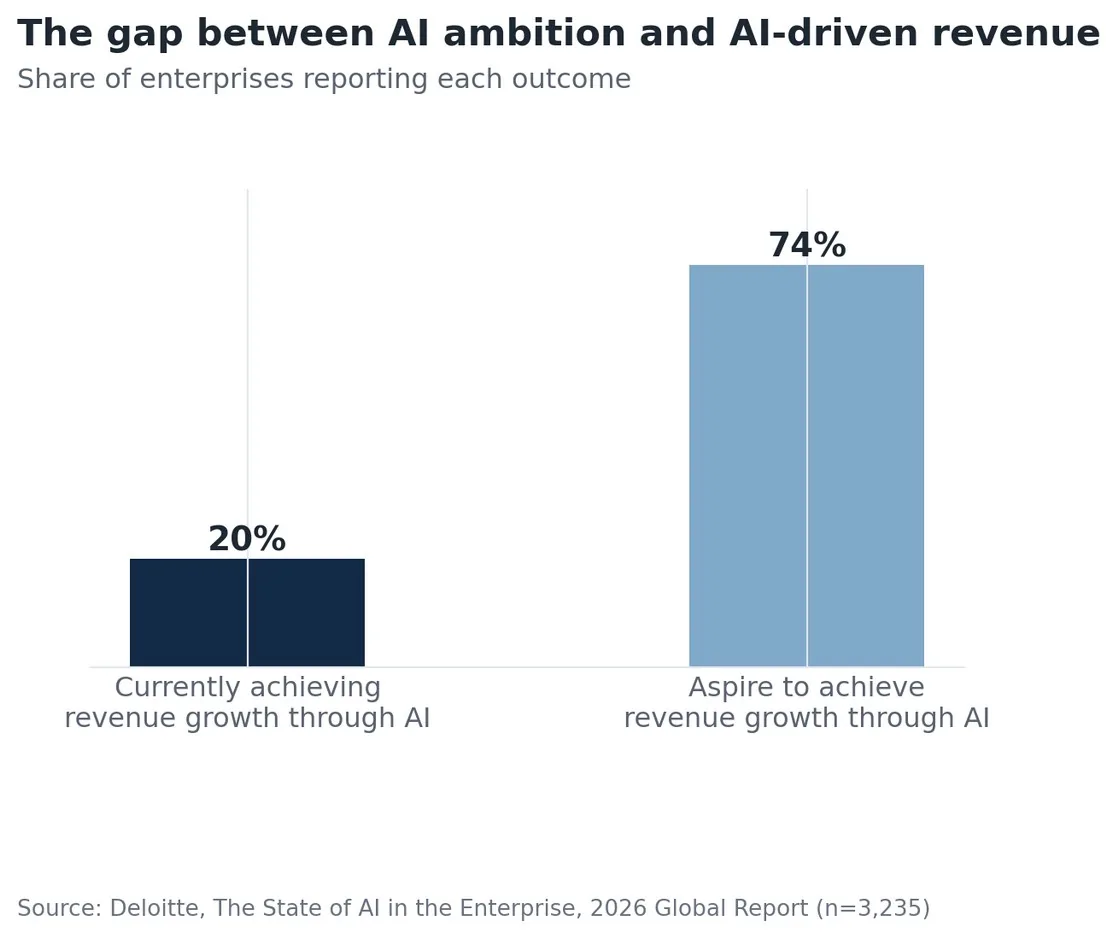
The same report identifies a further, more specific gap: only 20% of organizations report currently achieving revenue growth through AI, against 74% who aspire to. That 54-point gap between ambition and realized outcome is the clearest available evidence that enterprise AI adoption, broadly, remains earlier in its value- realization curve than the surrounding conversation often implies — a pattern SAP-specific AI capability is unlikely to be exempt from simply by virtue of being embedded in newer infrastructure.
Figure 2. The gap between AI ambition and realized AI-driven revenue growth.
© Orpington Technologies Inc. · orpingtontech.com · Page
2