
Master Data Governance After Go-Live: Why Clean Data at Cutover Doesn't Stay Clean
 Orpington Technologies | SAP S/4HANA Migration Insights
© Orpington Technologies Inc.
www.orpingtontech.com
Orpington Technologies | SAP S/4HANA Migration Insights
© Orpington Technologies Inc.
www.orpingtontech.com
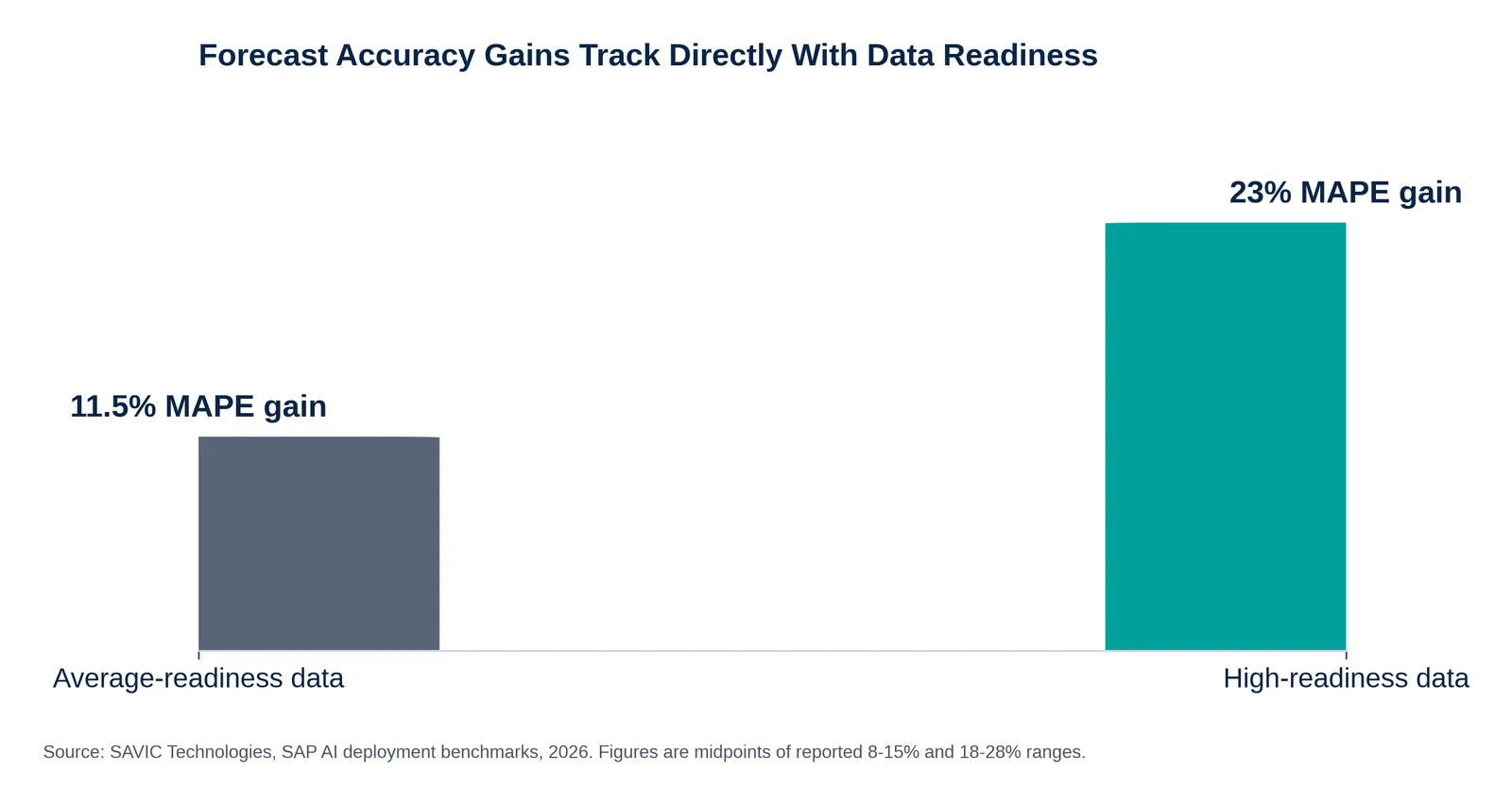
models. They just perform meaningfully better because the material and sales history data feeding them is cleaner and more consistent.
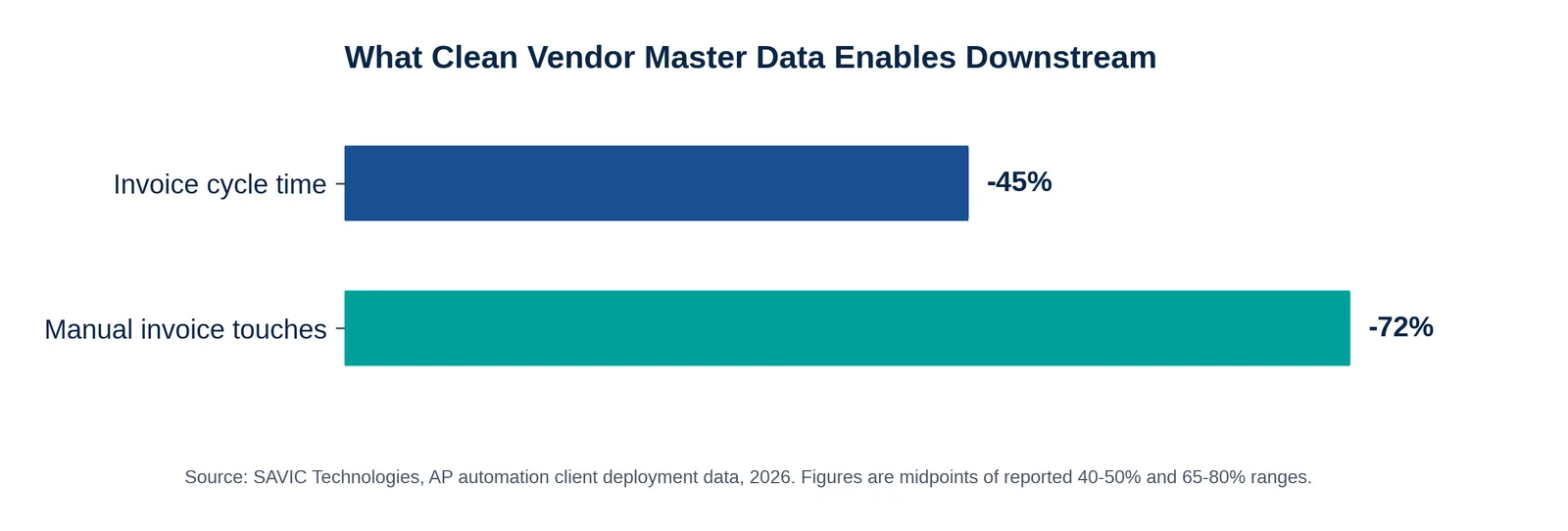
The pattern repeats in accounts payable. SAVIC's client deployment data shows clean, well-governed vendor master data enabling a 40–50% reduction in invoice processing cycle time and a 65–80% reduction in the manual touches required per standard invoice. Those gains come from automation being able to trust the vendor and payment-term data it's matching against, instead of routing an exception to a human reviewer every time a record looks slightly off.
Where Governance Still Needs an Owner
AI-assisted governance tooling is good at flagging: probable duplicates, drifting records, anomalous entries. Letting it auto-resolve those flags unattended is a much worse idea, especially for merge decisions, which are hard to reverse cleanly once downstream transactions have posted against the surviving record. The governance programs getting the best results keep a named data steward (usually embedded in the business, not IT) as the decision-maker on every flagged case. AI's job there is making sure nothing worth reviewing slips through, not replacing the reviewer.
Page 3 of 4