
The Financial Case for SAP S/4HANA Migration: Beyond “ECC Is Being Retired”
thirteen months, and a net present value of $21.9 million, built from total three-year benefits of $38.2 million against total three-year costs of $16.3 million.
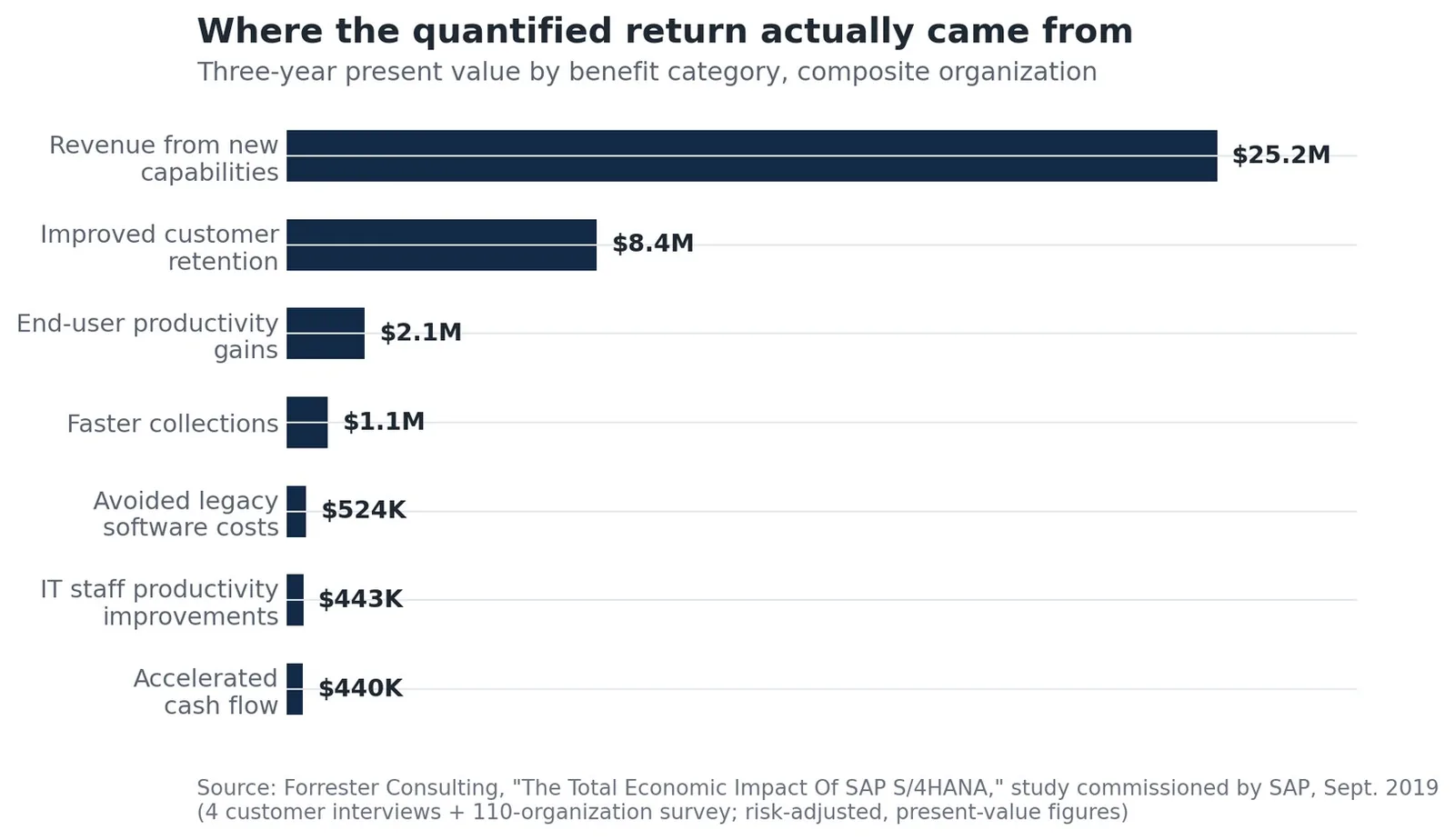
Figure 1. Where the quantified three-year return came from, composite organization.
What this shows:
The largest share of the modeled return came from new revenue-generating capability and improved
customer retention — not from IT cost avoidance, which is a smaller and more predictable share of the total case.
The composition of that return is worth reading closely, because it undercuts a common assumption: that the financial case for ERP modernization is primarily about IT cost avoidance — retiring old hardware, reducing support contracts. In Forrester’s model, avoided legacy software costs accounted for only $524,000 of the $38.2 million in modeled benefit. The largest components were revenue from new capabilities ($25.2 million, with 37% of surveyed customers reporting revenue increases averaging 3.2%) and improved customer retention ($8.4 million, tied to a 4.1-percentage-point reduction in annual churn). End-user productivity gains, faster collections, and IT staff productivity improvements made up the remainder.
This is a useful corrective for how the business case is often framed internally. A proposal built primarily around infrastructure savings will systematically understate the available return, because infrastructure savings are the smallest, not the largest, share of what a well-executed S/4HANA migration has been shown to deliver.
Why the deadline still belongs in the memo — just not as the headline
None of this means the 2027 mainstream-maintenance deadline is irrelevant to the financial case — it is directly relevant to cost, because delay carries its own quantifiable price. SAP’s own 2022 policy update sets extended maintenance for certain on-premise S/4HANA releases at an additional four percent of the core maintenance base for organizations that remain off SAP’s RISE cloud subscription, a genuine, ongoing cost of deferring the decision. The deadline belongs in the business case as a cost-of-delay input, alongside the return-on-investment case — not as a substitute for it.
© Orpington Technologies Inc. · orpingtontech.com · Page
2