
Agentic AI Arrives in ERP: What Oracle Fusion's AI Agents Mean for SMBs
Cross-Sell Program Workspace for sales, and a Collectors Workspace for accounts receivable. The framing Oracle uses is "outcome-driven" and "reasoning-based" applications that operate with governance controls built in, rather than a single chatbot bolted onto the existing interface.
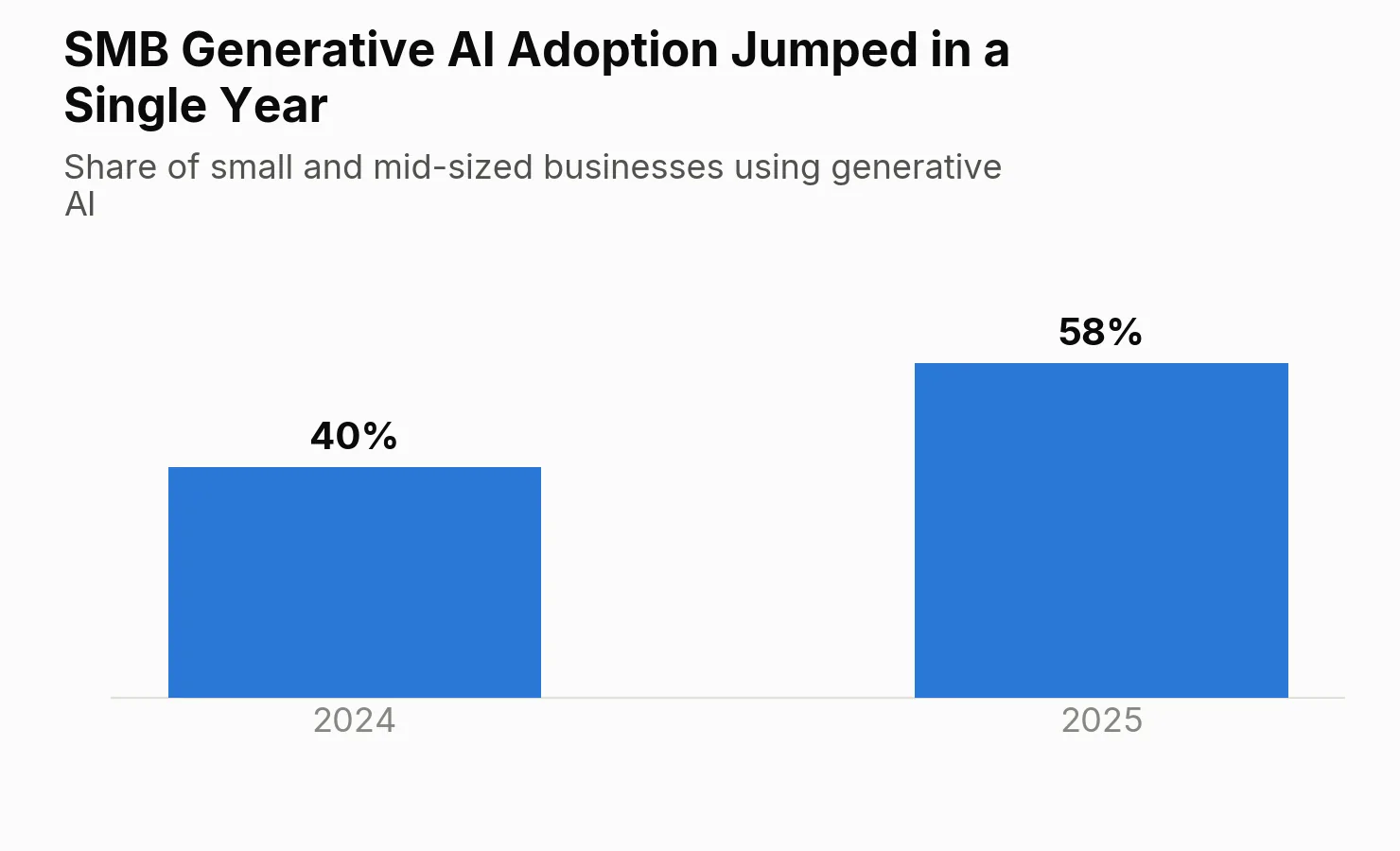
SMB adoption of generative AI accelerated sharply in a single year, setting the stage for agentic capabilities to follow the same
curve. Source: KreativeCoreTech, 2026.
That last point — governance — is the detail worth paying closest attention to if you're evaluating this for a small or mid-sized business rather than a Fortune 500 IT department. An accounts receivable agent that can autonomously decide which overdue accounts to contact and how is genuinely useful, but only if it operates within clearly defined rules about tone, escalation thresholds, and when a human needs to step in — a large customer with a payment dispute is not the same situation as a small one who simply forgot an invoice, and the agent needs to be configured to know the difference.
Why this is landing now, and why SMBs specifically matter to the story
Generative AI adoption among small and mid-sized businesses nearly doubled in scope over a single year, from roughly 40% in 2024 to 58% in 2025 — a faster curve of adoption than most people assume happens outside large enterprises with dedicated AI teams. That context matters, because it means SMBs aren't a market Oracle is targeting as an afterthought with agentic capability; they're already comfortable enough with AI tools broadly that agentic features built into a platform they already use represent a much smaller leap than building or buying a separate AI tool from scratch.
© Orpington Technologies Inc. www.orpingtontech.com
Page No. 2 of 4