
Change Management: Winning Employee Buy-In for a New ERP System
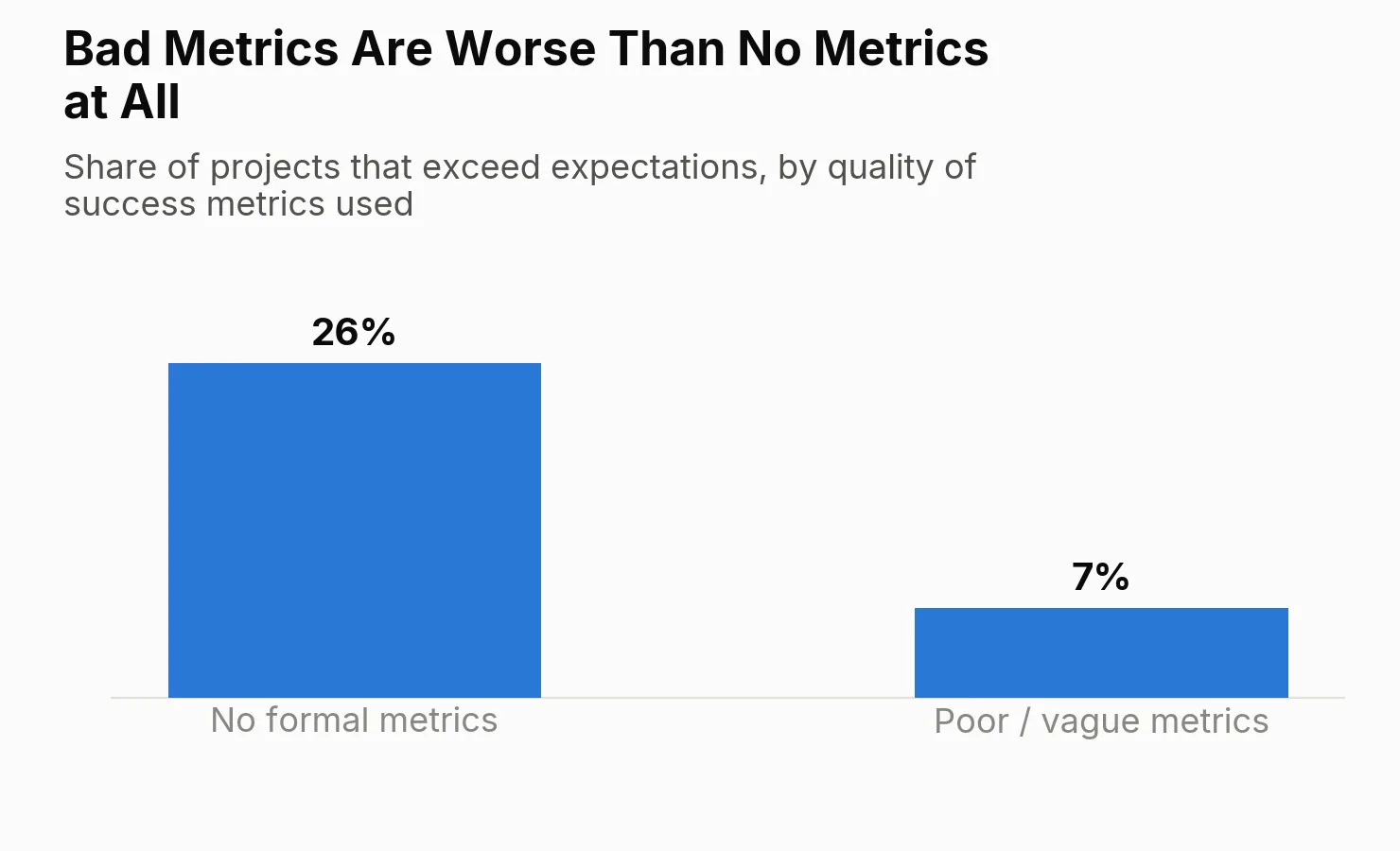
that a bad measurement framework can be actively worse than an honest absence of one, because it creates false confidence that adoption is on track when it isn't.
Vague or poorly designed success metrics correlate with worse outcomes than tracking no formal metrics at all. Source:
Prosci, 2026.
The practical adoption targets worth aiming for are fairly concrete: roughly 90% user engagement within the first 30 days after go-live, and sustained adoption at a similar level within three months. Falling meaningfully short of those benchmarks is an early warning sign worth acting on immediately, not a metric to revisit at the next quarterly review once the pattern is already entrenched.
What good change management actually looks like in practice
None of this requires an elaborate program. The elements that consistently show up in successful ERP rollouts are fairly grounded: clear, honest communication from leadership about why the change is happening and what problem it solves, delivered before the system goes live rather than as an afterthought once people are already confused; role-specific training that reflects how each group of employees will actually use the system day to day, rather than a generic overview session that covers everything superficially and nothing well; visible, accessible support in the first few weeks after go-live, when people are most likely to hit friction and most likely to revert to old habits if that friction isn't addressed quickly; and genuine two-way feedback channels, so that legitimate problems with the new process get identified and fixed rather than quietly worked around.
The common thread is that people adopt new systems faster when they understand why the change is happening and feel like their concerns during the transition are being heard, not just tolerated until the rollout is officially declared complete.
© Orpington Technologies Inc. www.orpingtontech.com
Page No. 3 of 4