
People and Payroll: Oracle Fusion Cloud's Workforce Management for Growing Teams
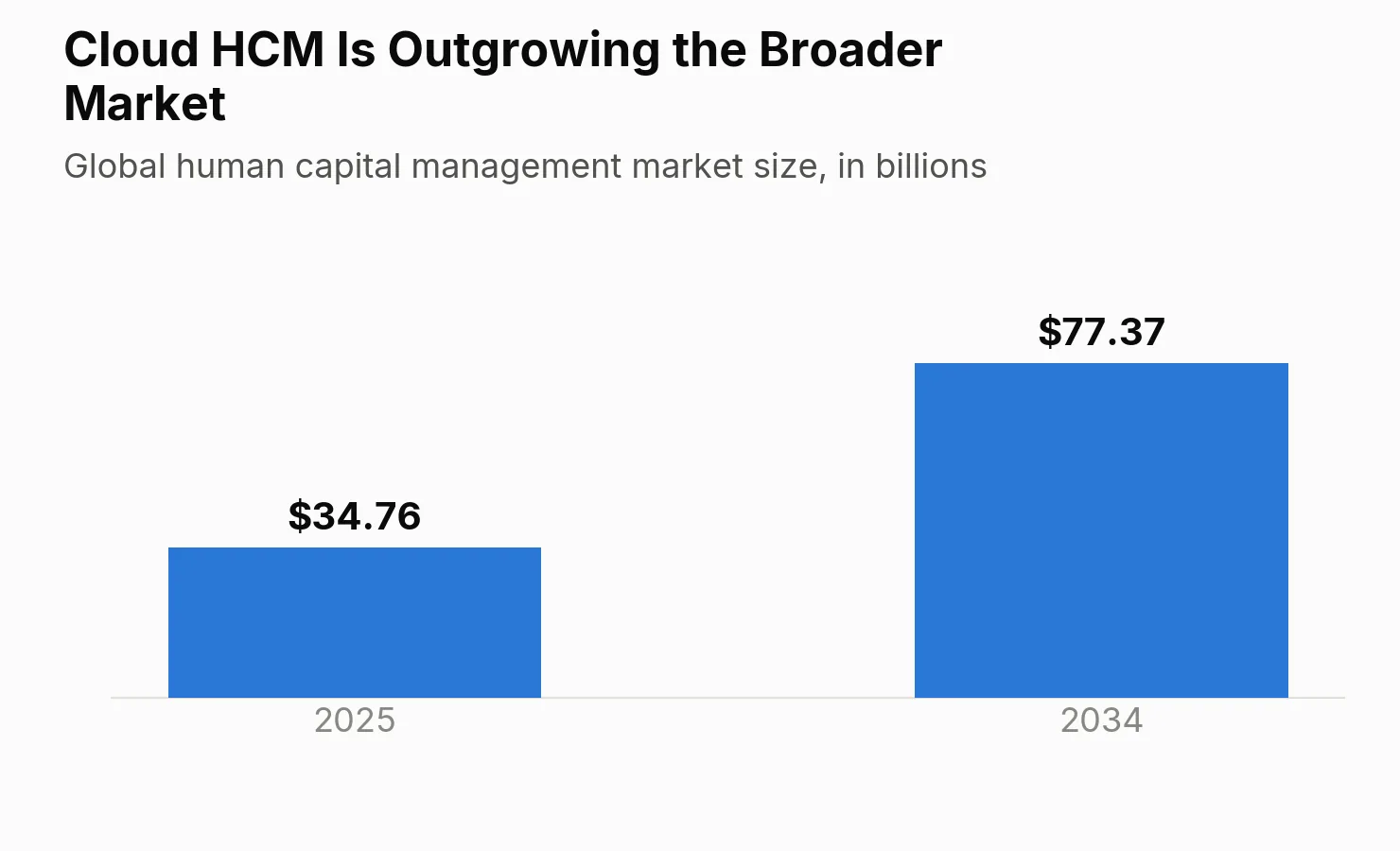
year as cloud pricing brings HCM capability that used to be enterprise-only within reach of a two-hundred-person company.
The HCM market is more than doubling this decade, with cloud and SME adoption both outpacing the overall average. Source:
Fortune Business Insights, 2026.
That growth isn't happening because HR departments suddenly discovered a taste for new software. It's happening because the alternative — a patchwork of spreadsheets, a standalone payroll vendor, a filing cabinet of paper personnel files, and whatever compliance knowledge lives in one person's head — becomes genuinely dangerous once a company crosses certain size and complexity thresholds. Multi-state employment, benefits administration, wage and hour compliance, and performance management all get harder to manage safely without a system built for the purpose.
What actually lives inside the HCM piece of Fusion Cloud
Oracle's workforce management functionality spans the obvious ground — payroll, benefits, time and attendance — but the more consequential part for a growing company is usually the connective tissue between HR data and the rest of the business. Headcount and labor cost data flow directly into financial reporting instead of arriving as a monthly export somebody has to reconcile by hand. Org charts and reporting structures stay current automatically as people move roles, rather than living in a document that's accurate the week it's created and stale a month later. Compliance rules for different jurisdictions get built into the system's logic rather than depending on someone's memory of what changed in state tax law this year.
© Orpington Technologies Inc. www.orpingtontech.com
Page No. 2 of 4