
Six Ways an S/4HANA Migration Goes Sideways
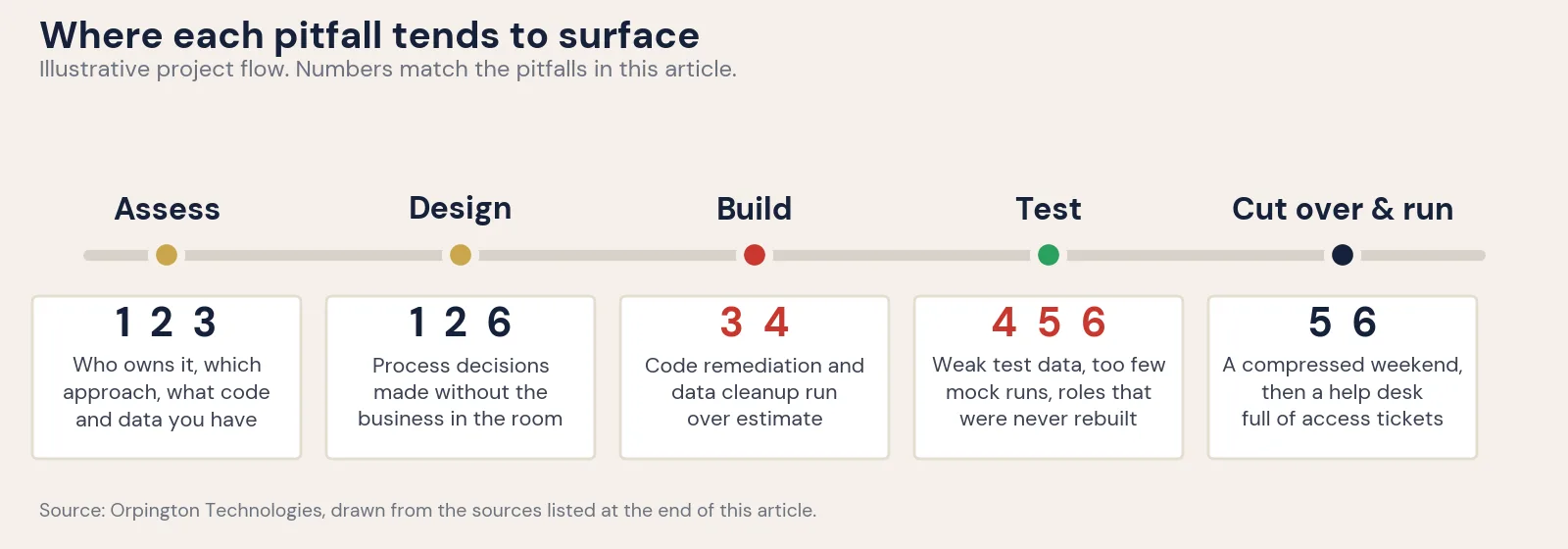 changed in their process and why, the project is not as far along as the status report says.
2. Picking an approach out of habit
changed in their process and why, the project is not as far along as the status report says.
2. Picking an approach out of habit
Whether you start clean (greenfield), convert what you run today (brownfield), or move selectively (bluefield, also called selective data transition) shapes nearly everything after it: the timeline, the
testing load, and how much old baggage makes the trip
[3]
. Teams tend to slide into brownfield
because it is the easiest to explain, then find they have carried twenty years of workarounds into a new system. Others pick greenfield for the fresh start and underestimate how much history finance and audit will want to see. Neither choice is wrong. Choosing before you have looked at your own code, data and appetite for change is.
Scope deserves the same discipline. One practitioner guide argues that locking scope early is what
keeps a twelve-month project from turning into a twenty-four-month one
[4]
.
3. Dragging custom code across unexamined
SAP’s conversion guide points you to two things before anything else. One is the SAP Readiness Check, which analyzes the configuration, data and usage of your production system. The other is the
Simplification Item Catalog, which lists what changes or breaks compared with ECC
[5]
. The catalog
covers everything, not just what applies to you, so someone still has to work out which items are
relevant to your system
[5]
.
Custom code is where this goes wrong most often. SAP’s recommended tool is the ABAP Test Cockpit,
set up once as a central check system and pointed at all the custom code across your systems
[6]
.
Teams usually fail in one of two ways. Either nobody runs the scan until the build is under way, so the effort estimate was a guess, or the scan gets run and the team dutifully fixes every finding, including code nobody has called in years. Usage data is what separates the two. Fix what people actually run, and put a name next to everything you are willing to retire.
4. Moving messy data and hoping the tool sorts it out
Migration tools move data. They don’t repair it
[7]
. Duplicate vendors and inconsistent product records
pile up quietly over the years, and they stay out of sight in ECC until an S/4HANA load drags them into view.
Orpington Technologies | SAP S/4HANA Migration Insights
© Orpington Technologies Inc.
www.orpingtontech.com
Page 2 of 4